Free Deliveries to all European Countries
Free Deliveries to all European Countries
5 years warranty
FSC®-certified


898 €
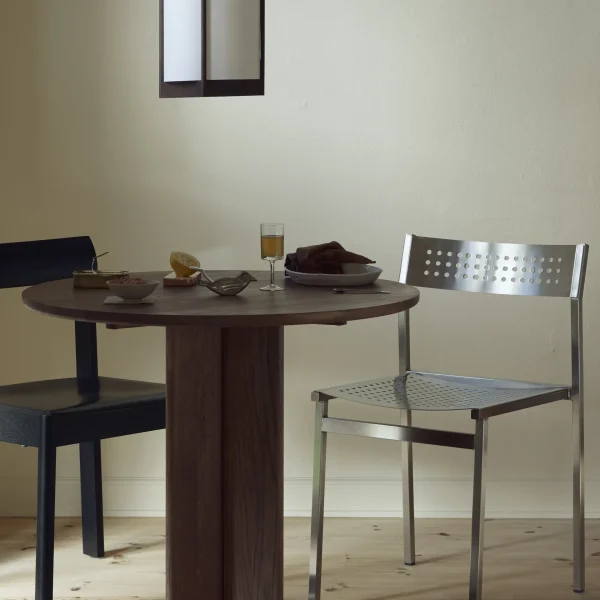
A centre point of free-floating solid oak elements hold the round table in place, creating a contradiction of lightness and substantiality. The free space of the three legs adds to the lightness and special visual complexity of the table. The three legs make it possible to sit around the table in comfort with much more space for each user.
Materials: FSC®-certified Solid European Oak. Mounting Brackets Steel
Place of Origin: Made in Poland
Dimensions: H: 72,5 cm, Ø: 75 cm
Net weight: 13 kg
Finish: White Oil
Designed by: Jonas Herman, Herman Studio
Product number: 1251
See the Maintenance & Care Guide here

A round table with a special visual complexity
A centre point of free-floating solid oak elements hold the round table in place, creating a contradiction of lightness and substantiality. The free space of the three legs adds to the lightness and special visual complexity of the table. The three legs make it possible to sit around the table in comfort with much more space for each user.
A Natural Material
The variations of oak
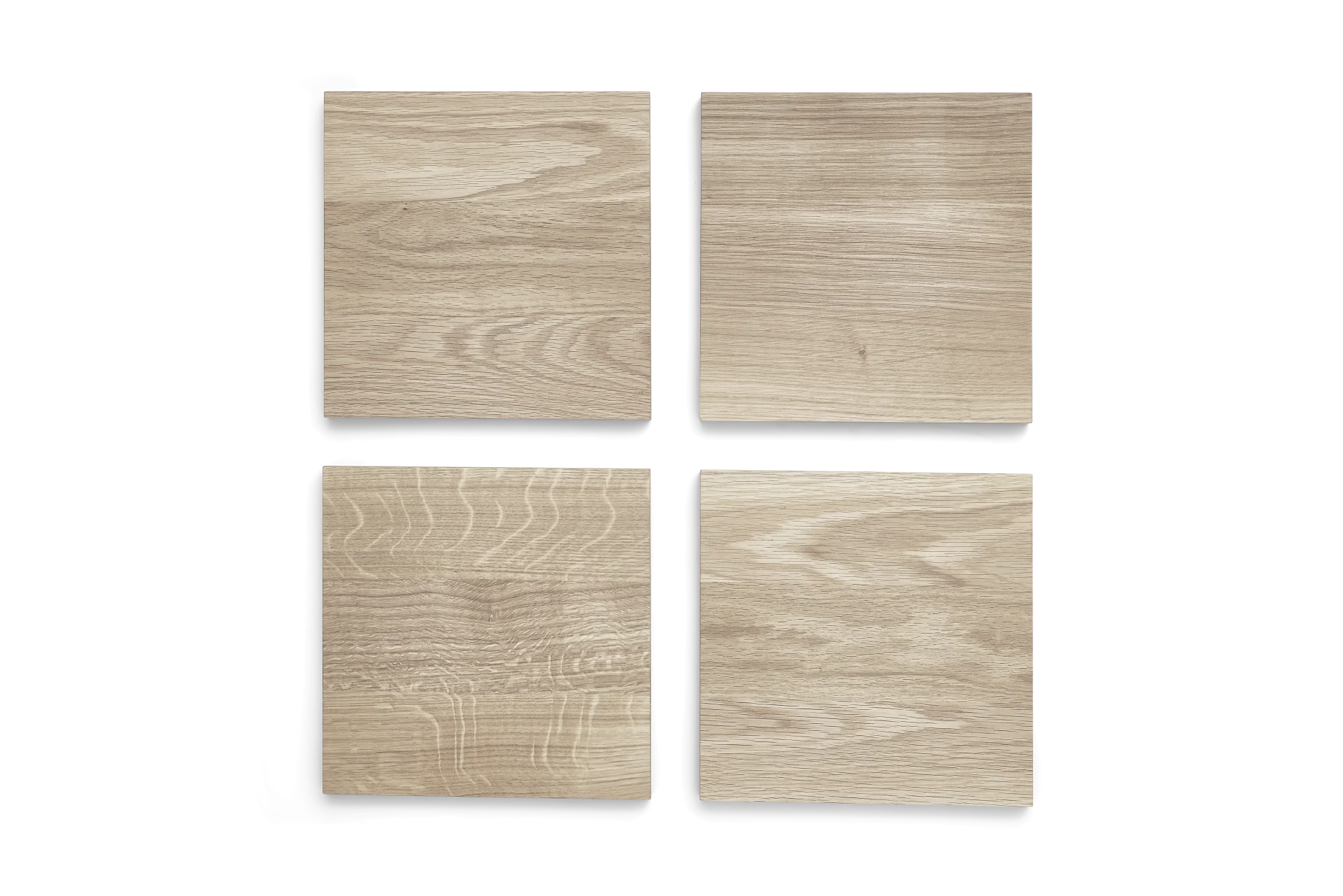
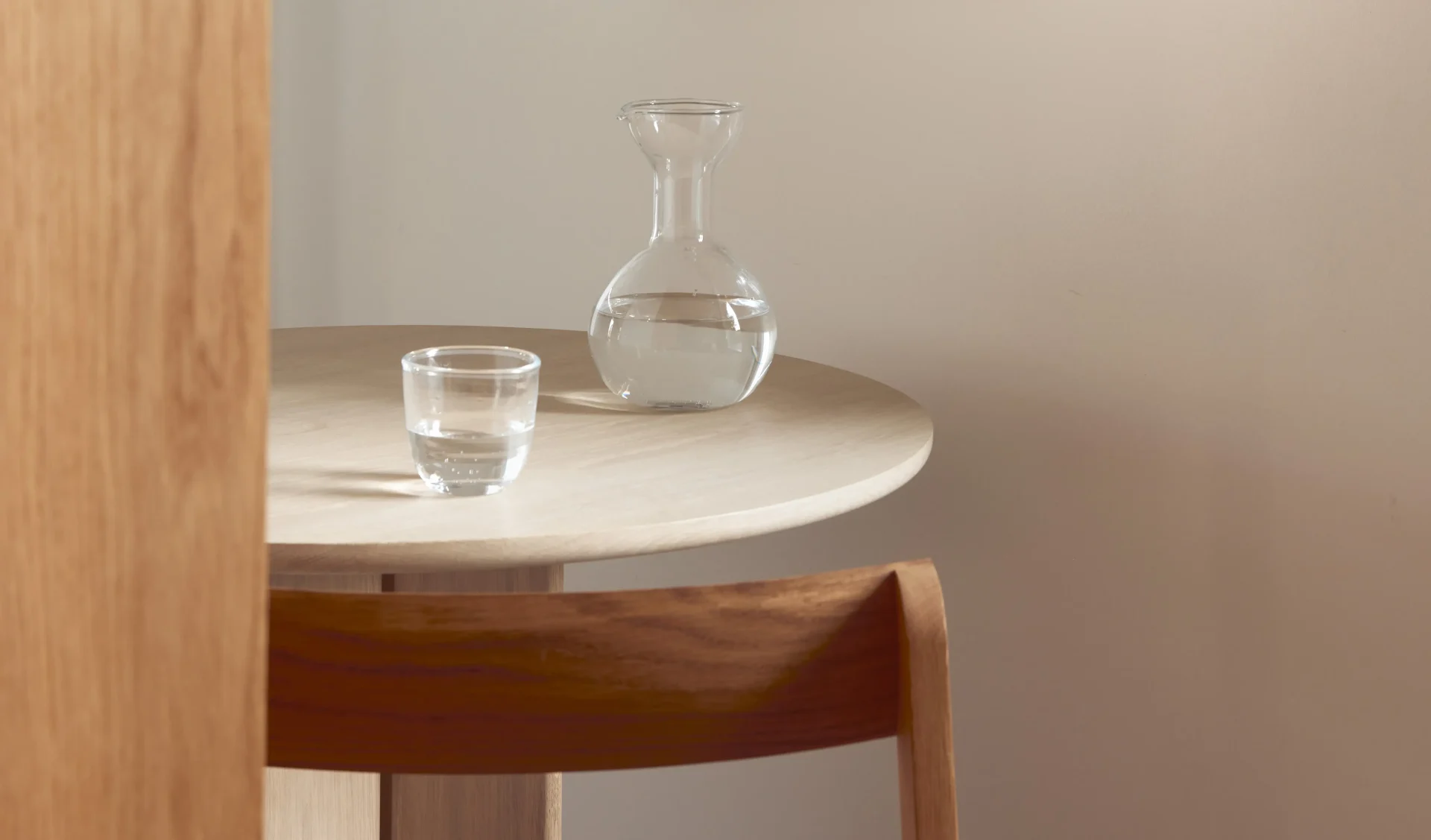
Wood is a natural material, and its appearance is strongly influenced by how the timber is cut from the log. Different cutting methods reveal different parts of the tree’s structure, naturally creating variations in grain pattern, texture and colour. For example, plank-cut oak often shows wider and more vivid grain patterns, while quarter-cut or rift-cut oak creates a calmer and more linear appearance.
These variations are a natural and expected characteristic of solid wood. They are not defects or inconsistencies, but a direct result of the tree’s natural growth and the way the material is processed.
The examples shown here illustrate how differences in cut, structure and surface treatment can influence the final appearance of the wood. At Form & Refine, we embrace these differences as part of the material’s authentic character.
”The aim was to create an interesting shadow effect where three identical legs meet each other. The three legs stand very close together and shape the characteristic construction of the table”
– Jonas Herman, Herman Studio