Free Deliveries to all European Countries
Free Deliveries to all European Countries
5 years warranty
FSC®-certified


849 €
Materials: FSC®-certified Solid European Oak. Oak Veneer Tabletop
Place of Origin: Made in Poland
Dimensions: H: 73,5 cm, W: 70 cm, L: 70 cm
Net weight: 16,1 kg
Finish: Matt Laquer
Designed by: Jonas Herman, Herman Studio
Product number: 1700
See the Maintenance & Care Guide here
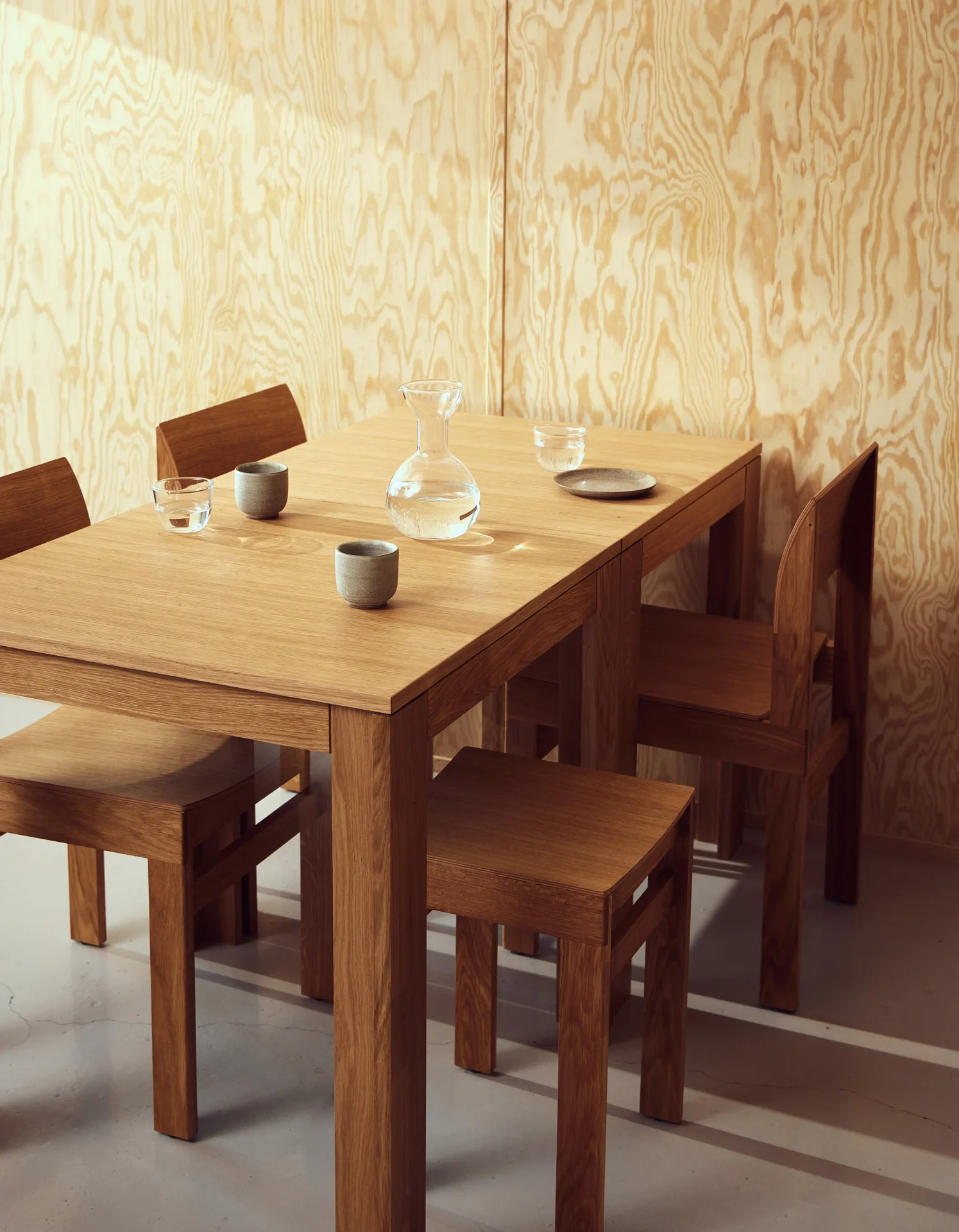
A square table with a graphic silhouette
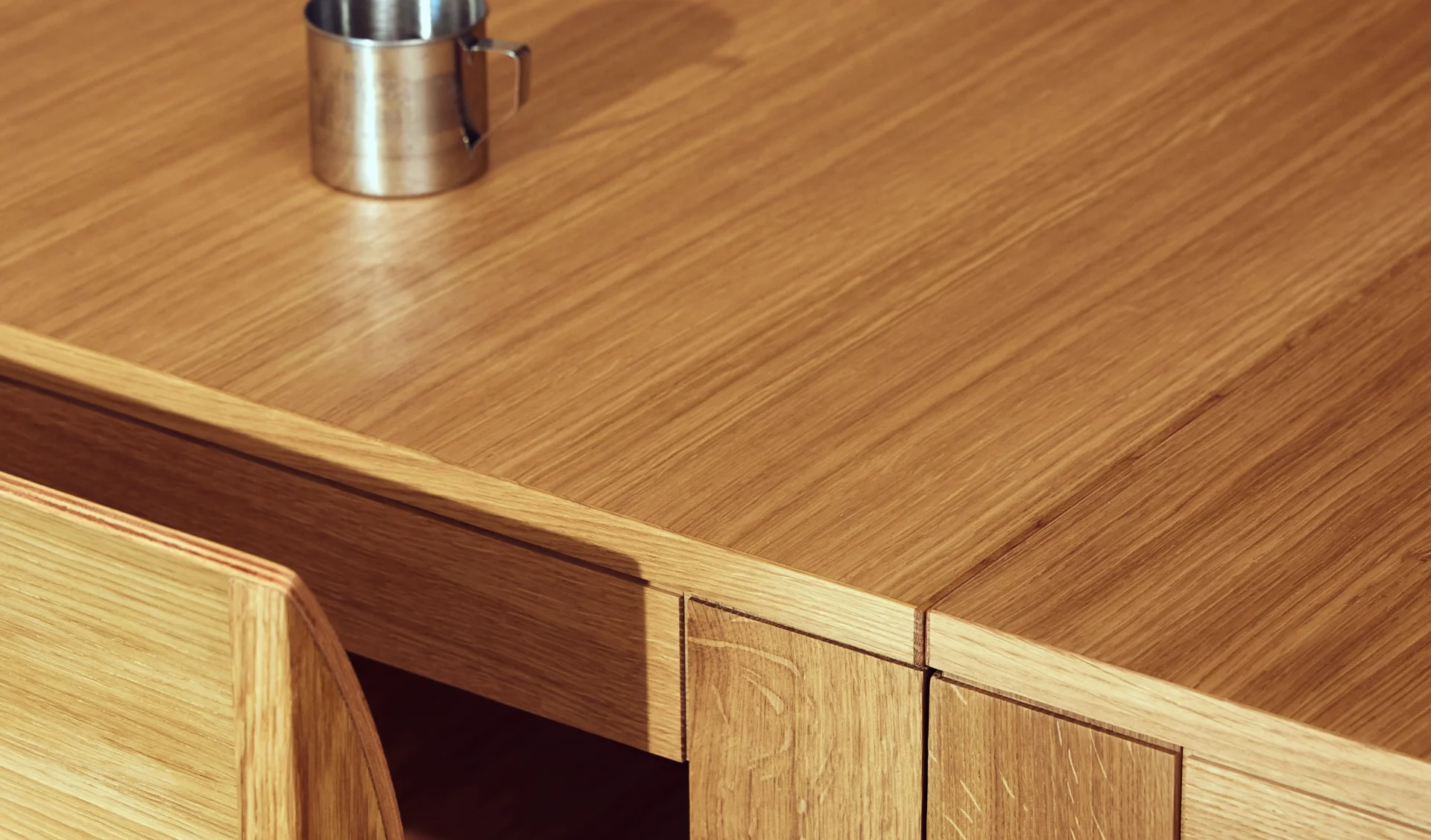
An ultra-slim table in a minimalist look with slightly recessed straight legs, which create a little shadow, and additional modules can be added in a row to create a strong, graphic appearance.
Another elegant feature is the fine line between the tabletop and the legs and frame. This detail creates a second, even more delicate shadow edge, giving the impression that the table is floating, despite its strong and durable construction.
The Element table is designed to meet the demands of both domestic and commercial settings. Built to last, this robust piece is engineered to withstand everyday use and most impacts.

A Natural Material
The variations of oak

Wood is a natural material, and its appearance is strongly influenced by how the timber is cut from the log. Different cutting methods reveal different parts of the tree’s structure, naturally creating variations in grain pattern, texture and colour. For example, plank-cut oak often shows wider and more vivid grain patterns, while quarter-cut or rift-cut oak creates a calmer and more linear appearance.
These variations are a natural and expected characteristic of solid wood. They are not defects or inconsistencies, but a direct result of the tree’s natural growth and the way the material is processed.
The examples shown here illustrate how differences in cut, structure and surface treatment can influence the final appearance of the wood. At Form & Refine, we embrace these differences as part of the material’s authentic character.
”I wanted to design a table with a Brutalist expression as well as Brutalist strength. Added details in between all the joints serve to visually separate the table’s elements, hence the name.” – Jonas Herman, Herman Studio